Planting Seeds of Change: Parenting for a Greener Tomorrow
The greatest threat to our planet is the belief that someone else will save it.–
Robert Swan
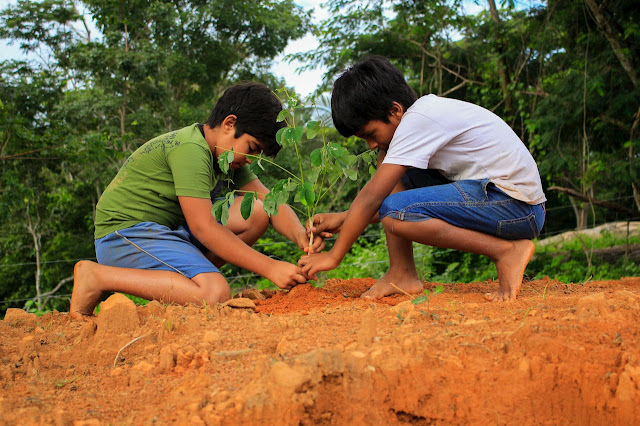
Climate change, global warming, reducing Earth’s temperature, sustainable development — these words often sound heavy, distant, and like matters meant only for governments or international agencies. And yes, those institutions do have immense responsibility and power. But as responsible citizens, we too share a vital role — especially as parents — in shaping a better, more sustainable future. While international institutions are working at their level, the responsibility doesn’t end there. True change begins at home — especially through parenting. When children grow up with eco-conscious values, they carry them into adulthood — into the professions they choose, the businesses they lead, the laws they support, and the habits they adopt.
This idea may seem ambitious, but it’s full of potential. Parenting is one of the most powerful tools we have to create lasting change — not only in the life of a child but in the direction of society itself. Just like a potter envisions a form and carefully shapes clay into something beautiful, parents can help mold the future, one lesson and one habit at a time.
Both parents and teachers hold a unique position to guide young minds toward responsible choices. I still remember how I was taught never to waste water — “Take only what you need.” Back then, it was just a rule; today, I understand its deeper value. The children in school today will one day lead our governments, businesses and communities. The sustainable lessons they learn now will influence the decisions they make tomorrow.
What Is Sustainable Development?
Sustainable development is the idea that we should use natural resources in a way that meets our current needs without compromising the ability of future generations to meet theirs. It’s about living responsibly — balancing progress with preservation.
In 2015, all member states of the United Nations (UN) adopted the 2030 Agenda for Sustainable Development, which outlined 17 Sustainable Development Goals (SDGs). These goals aim to promote peace, prosperity, and a healthy planet for all.
According to Wikipedia, their purpose is clear: “peace and prosperity for people and the planet.”
Here are the 17 Global Goals:
- No Poverty
- Zero Hunger
- Good Health and Well-being
- Quality Education
- Gender Equality
- Clean Water and Sanitation
- Affordable and Clean Energy
- Decent Work and Economic Growth
- Industry, Innovation, and Infrastructure
- Reduced Inequality
- Sustainable Cities and Communities
- Responsible Consumption and Production
- Climate Action
- Life Below Water
- Life on Land
- Peace, Justice, and Strong Institutions
- Partnerships for the Goals
While these goals may sound large-scale, each of us — as individuals, and especially as parents — has a role to play. We may not draft global policies, but we shape the mindset of the next generation. That’s where our true influence lies.
Parenting with a sustainability mindset — sometimes called green parenting — empowers our children to make mindful choices, respect nature, and grow up with the awareness that they are part of a bigger, shared world.
How Parents Can Raise Eco-Responsible Children
Children learn best not through lectures, but by observation, habit, and small daily actions. As parents, every word we speak and every choic we make leaves an impression. Here are simple yet powerful ways to build eco-friendly values in your child’s mindset:
1. Teach Waste Responsibility
· Encourage children to throw garbage only in the dustbin.
· Introduce waste segregation at home — let them help sort dry and wet waste.
· Teach the 3 R’s: Reduce, Reuse, and Recycle.
2. Promote Water Conservation
· Explain that clean water is precious and limited.
· Make rules like turning off the tap while brushing or using only what’s needed.
· Let them help in watering plants with leftover water (e.g., from washing fruits).
3. Talk About Energy Use
· Involve them in switching off lights, fans, and devices when not in use.
· Teach them that saving electricity is saving the environment.
· Introduce the idea of solar energy or show them videos on how energy works.
4. Build a Love for Nature
· Spend time outdoors: gardening, visiting parks, or nature walks.
· Plant a tree or even a small indoor plant and assign your child as its “caretaker.”
· Encourage questions about how plants grow, animals live, and why the earth needs care.
5. Encourage Sustainable Choices
· Use cloth bags instead of plastic — let them carry one proudly.
· Reuse school supplies like pencil boxes or notebooks when possible.
· Avoid single-use plastics and explain why.
6. Make It Fun and Interactive
· Use stories, cartoons, or eco-themed games to make learning enjoyable.
· Watch family-friendly documentaries together, like Our Planet or Wall-E.
· Reward eco-friendly behavior (praise, stars, storytelling time, etc.).
A Parenting Tips:
You don’t need to teach everything at once. Consistency beats intensity. When a child is appreciated for even the smallest green act, it builds lasting habits and a sense of responsibility — not from fear, but from love and pride.
Frequently Asked Questions ( FAQ )
1. Why should parents teach kids about climate change?
Because habits formed early last a lifetime. Children who learn to care for the planet become adults who protect it.
2. Isn’t climate change too complex for kids?
Not if you simplify it. Use stories, nature walks, and small daily actions to make it relatable and age-appropriate.
3. What’s one simple eco-habit to start with?
Start with waste segregation or using reusable water bottles. Small steps build long-term awareness.
4. My child is too young — when should I start?
Start now. Even toddlers can learn to throw waste in the right bin or save water while brushing.
5. Can one family really make a difference?
Yes. Your home is your child’s first school. The values you instill multiply as they grow and influence others