10 Everyday Things We Already Do: Let’s Make Them a Little Better

We all have routines we repeat without thinking. Going out for milk. Cooking dinner. Taking the children to school. We do them the same way, by the same means, day after day, and they rarely feel like anything special.
Take the milk run. Someone grabs a bag, takes the shortest road, phone in hand, and is back in eight minutes. Now keep the outcome exactly the same, milk in the fridge, and change only the way you get it. Go at a set time, take a road that is a few minutes longer, wear comfortable shoes, and let a child pick the route. Same milk. A different evening.
The Japanese have a word for this way of thinking: kaizen. It is usually translated as continuous improvement, or change for the better, and it means small steps taken steadily, with no big overhaul needed. A family does not need a new schedule or a bigger budget. It needs a few small, steady changes inside the day it already has.
This post was inspired by James Clear’s book Atomic Habits, which builds on the same idea: tiny changes, repeated, add up over time.
That is the idea behind this post: ten simple family health tips, drawn from ordinary moments, from the shop run to bedtime. Each comes with one small tweak, so the moment feels a little calmer, healthier, or more connected, without adding a single extra hour.
Small, repeated changes are easier to keep than big ones. In a well-known study from University College London, volunteers picked one small daily action and linked it to something they already did each day. Missing a single day did not undo it, and over the weeks the action felt more automatic. How long that took varied a lot from person to person, from a few weeks to several months, so please read it as encouragement and not as a schedule. On movement, the World Health Organization says every type of movement counts, so even a short walk to the shop adds up.
Below are ten ordinary moments, just like the milk run. For each one you will see what we usually do, one small tweak, and why it may help. The grocery walk comes first, since you have just seen it. Pick any one for this week. That is enough.
1. The grocery run becomes a health walk
What we usually do: Take the shortest route, quickly, often with a phone in one hand.
A small tweak: Choose two or three set times a week. Take a route a few minutes longer. Wear comfortable shoes (no sports gear needed). Say out loud, “This is our walk, and we are also getting bread.” Young children can look for things on the way, and older kids can choose the route.
Why it may help: Walking counts as physical activity, and a planned walk is more likely to happen than a “someday” walk. Treating the trip as your walk, and not just a chore, is a simple mindset shift. The evidence for that is light, but many people find they enjoy the trip more. Our post on how attitude shapes stress goes deeper on that idea. If the roads are busy, the heat is strong, or there is no footpath, a few laps around a courtyard or building works just as well.
2. Cooking becomes a shared job
What we usually do: One adult cooks while everyone else is somewhere else.
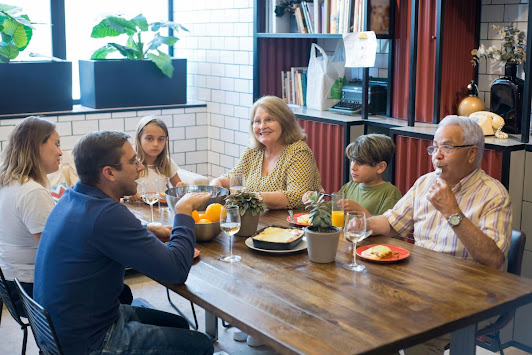
A small tweak: Give each person one small task for their age. Toddlers can wash vegetables, school-age children can stir or measure, teenagers can pick a recipe once a week. Fifteen minutes is enough, and adults handle knives and hot pans.
Why it may help: Children feel useful, and talking while your hands are busy is often easier than a face-to-face chat. Studies link home cooking and family meals with healthier eating, but much of that research is observational, so it shows a link and not a guarantee.
3. Dinner gets a ten-minute screen-free start
What we usually do: Eat in front of the TV or with one eye on a phone.
A small tweak: Put phones in a basket across the room for the first ten minutes, adults included. Start with one easy question, like “What was the funniest thing today?” If shifts or school timings make dinner hard, pick any meal, even breakfast or evening tea.
Why it may help: Eating together is associated with closeness in many studies, though families who eat together often differ in other ways too, so it is hard to prove. The practical gain is simple: ten minutes of eye contact. For more on keeping technology in its place, see our guide to healthy family tech habits.
4. Music becomes a mood switch
What we usually do: Let music play in the background, or put on headphones and go our separate ways. In many homes the mood of the morning rush quietly sets the mood for the whole day.
A small tweak: Build two or three short “mood playlists” together, named for what they are for. A bright, upbeat one for waking up and getting ready. An energetic one for a ten-minute tidy-up or homework time. A soft, slow one for the last half hour before bed. Everyone adds a song, and the youngest gets a turn to pick. Play the music out loud instead of through headphones, so it is shared. Add a dance break, or sing in the car. Any music your family loves counts, whether it is pop, folk, devotional songs, or old film tunes, as long as the words suit your children’s ages.
Why it may help: Many people already use music to lift their mood, find some energy, or calm down. Reviews of the research generally find support for music improving positive feelings, especially when the listener chooses it on purpose. Results vary a lot from person to person, so let your family’s own taste lead. A tidy-up or a dance break adds a little movement too.
5. The car ride or school walk becomes talking time
What we usually do: Everyone is on a device, even for a short ride.
A small tweak: Keep the first ten minutes screen-free. Play “would you rather,” sing along, or ask a question of the day. If you can, get off the bus one stop early and walk the rest together.
Why it may help: Many parents find that children, especially teenagers, open up more when you are side by side and not face to face. It costs no extra time, because you were going anyway.
6. The evening TV hour becomes a shared hour
What we usually do: The TV is on, and everyone is also on a phone, half watching.
A small tweak: Pick one show or film together and turn the phones face down for the first half hour. Take turns choosing. Stand up and stretch during breaks. Afterwards, ask one easy question, like “Which character did you like most, and why?” On some evenings, swap the TV for cards or a board game.
Why it may help: You keep the show you enjoy and gain some conversation afterwards, plus a little movement during the breaks. Watching together gives you something shared to laugh about and talk over.
7. The morning rush starts the night before
What we usually do: Hurry, hunt for shoes, raise our voices.
A small tweak: After dinner, spend ten minutes on tomorrow: bags packed, clothes and shoes in one spot, water bottles filled, lunch planned. In the morning you then have two spare minutes for a hug, a stretch by the window, or a few slow breaths together.
Why it may help: Fewer decisions at the busiest hour often means less shouting. This one comes from everyday experience and not from a study, but many parents find it works. It will not fix every hard morning, but it can change how the day starts.
8. A call or a hello becomes a weekly connection
What we usually do: Call relatives only on festivals or when something is wrong, and walk past neighbours with our eyes down.
A small tweak: Pick one regular time each week for a short call or voice message to a grandparent, cousin, or friend, and let each child add one sentence. On your walk, say hello to one neighbour. Family looks different in every home, so “relative” can mean whoever feels like family to you.
Why it may help: Feeling connected to other people is linked to well-being across many studies. Children also learn how friendliness works by watching the adults around them.
9. Bedtime becomes a two-question check-in
What we usually do: “Brush your teeth, lights out,” and sometimes an argument about devices.
A small tweak: Ask, “What was one good thing today, and one hard thing?” Adults answer too. Your job is to listen, not to fix. Some teenagers prefer a text or a chat in the car, so follow their lead.
Why it may help: It gives a steady, low-pressure moment for feelings to come out, and children often start to use it on their own once they trust it.
10. Five minutes on the doorstep or balcony
What we usually do: Stay indoors all evening, especially in small homes or hot weather.
A small tweak: Sit on the doorstep, balcony, or by an open window around dusk with water or tea. Five minutes, no phones. Notice sounds, smells, and the sky.
Why it may help: Daylight and time outdoors are often linked to better mood and sleep, although results vary. It needs no money, no equipment, and no big space.
Key takeaways
- You do not need extra time. You need a plan for moments that already exist.
- A good tweak is small: a set time, a slightly different route, screens away, or one shared job.
- Start with one idea for one week. If it does not suit your home, change it or drop it.
- Small changes work best when they repeat. Missing a day is fine, so just carry on.
Every home is different. Children’s ages, work hours, climate, culture, and energy levels all change what is realistic, and that is fine. Use what fits.
This post shares general ideas for family well-being and is not medical advice. If you have concerns about your child’s health, development, or behavior, please talk with your pediatrician or a child psychologist.
Sources and further reading
- World Health Organization, “Every move counts towards better health” (2020), and the WHO physical activity fact sheet.
- Lally, P., van Jaarsveld, C., Potts, H., and Wardle, J. (2010). “How are habits formed: Modelling habit formation in the real world.” European Journal of Social Psychology. DOI: 10.1002/ejsp.674
- Rickard, N. S., “Music listening and emotional well-being,” in Lifelong Engagement with Music: Benefits for Mental Health and Well-Being (Nova Science Publishers).
- Clear, J. (2018). Atomic Habits. Avery.